
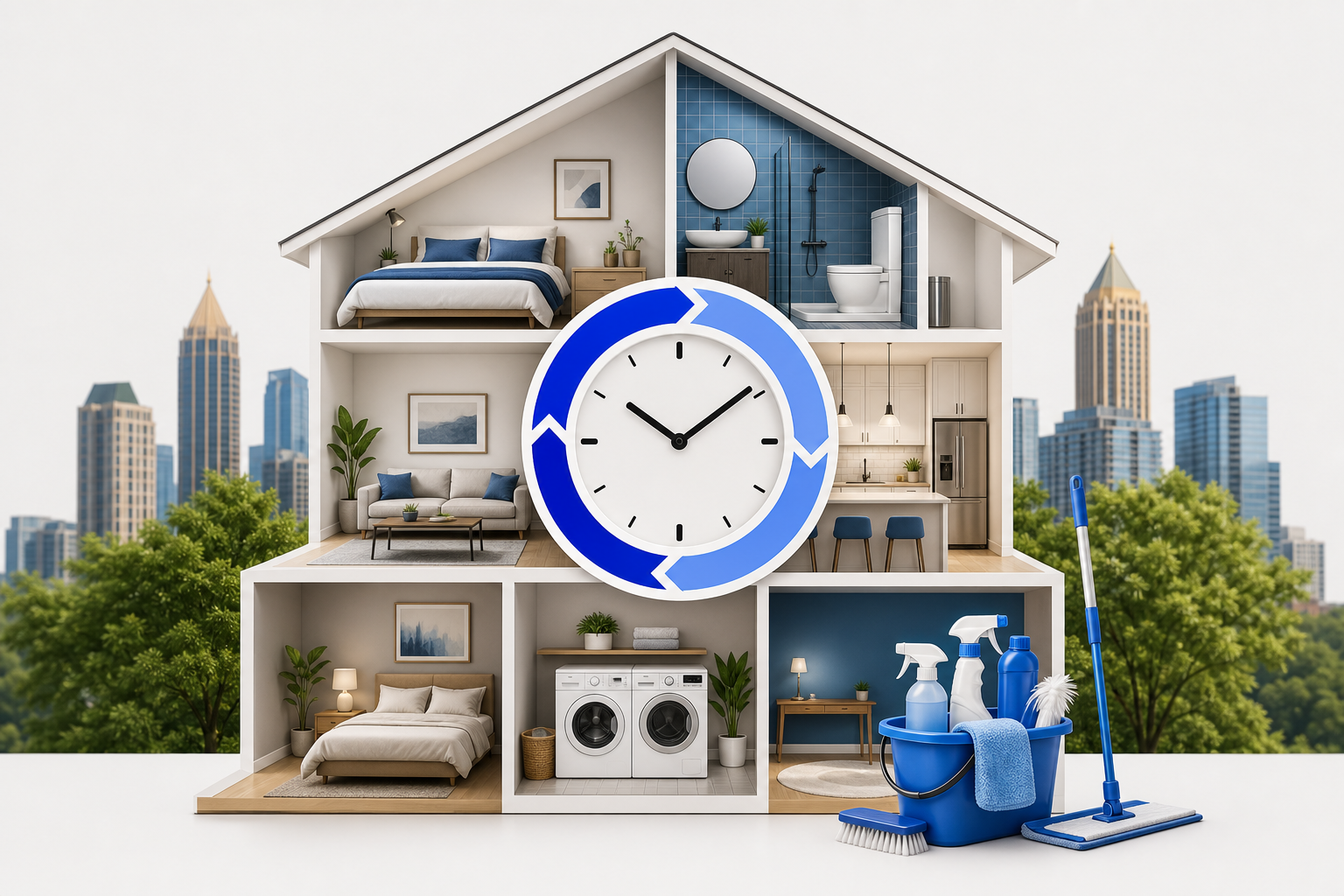
If you've ever wondered how often you should clean your house — and felt vaguely guilty that you don't have a clear answer — you're not alone. Most people clean reactively: when something looks visibly dirty, when guests are coming, or when the bathroom finally demands attention. The problem is that some areas get over-cleaned while others go weeks longer than they should.
This room-by-room guide gives you a practical cleaning schedule based on how each space actually gets used. No arbitrary rules, no one-size-fits-all weekly blitz — just a realistic framework you can follow, or hand off entirely.
Why Cleaning Frequency Varies by Room
Not every room accumulates grime at the same rate. A guest bedroom used twice a year needs far less attention than a kitchen running three meals a day. Frequency should track with foot traffic, moisture exposure, food contact, and how many people — or pets — use a space.
A few factors that push cleaning frequency up:
- Pets. Dander, tracked-in dirt, and fur settle on floors and upholstery faster than most people expect.
- Kids. Sticky surfaces, bathroom splatter, and high-touch areas like light switches and door handles need more frequent attention.
- Cooking habits. Daily cooking generates grease and food particles that build up quickly on surfaces and inside appliances.
- Atlanta's humidity. Moisture in the air accelerates mold and mildew growth, especially in bathrooms and laundry rooms.
With that in mind, here's how to think about each room.
Kitchen: Daily, Weekly, and Monthly Tasks
The kitchen is the hardest-working room in most homes, and it shows. Grease migrates farther than you'd expect, and bacteria multiply quickly on food-contact surfaces.
Daily
- Wipe down countertops after cooking
- Clean the stovetop surface (not just the grates)
- Wash dishes or run the dishwasher
- Wipe the sink and faucet
Weekly
- Clean the microwave interior
- Wipe cabinet fronts near the stove
- Mop or sweep the floor
- Empty and wipe out the trash can
Monthly or Quarterly
- Deep-clean the oven interior
- Pull out the refrigerator and clean underneath
- Wipe down refrigerator shelves and drawers
- Degrease the range hood filter
- Scrub tile grout on backsplashes
The oven and refrigerator are the two most commonly neglected kitchen tasks. Both build up residue that affects air quality — and in the case of the oven, can become a fire hazard if left long enough.
Bathrooms: More Often Than You Think
Bathrooms are small, high-moisture, high-traffic rooms. That combination lets bacteria and mold establish themselves quickly, especially around the toilet base, grout lines, and the underside of the rim.
Weekly
- Scrub the toilet bowl and wipe the exterior, including the base
- Clean the sink and faucet
- Wipe the mirror
- Mop or scrub the floor
Every Two Weeks
- Scrub the shower walls and tub
- Clean the shower door or curtain
- Wipe down light fixtures and the exhaust fan cover
Monthly
- Deep-scrub tile grout
- Clean inside the medicine cabinet
- Wash bath mats
If multiple people share a bathroom, shift the weekly tasks to every few days. Grout and caulk lines hold moisture and should be watched for early mold signs — especially during Atlanta summers.
Living Room and Common Areas: Weekly with Monthly Depth
Living rooms accumulate dust, pet hair, and skin cells on upholstered surfaces faster than hard floors do. The visible dirt on a hardwood floor is often less of a health concern than the invisible buildup on a fabric sofa.
Weekly
- Vacuum carpets and rugs
- Dust surfaces: shelves, TV stand, coffee table
- Wipe down remotes, light switches, and door handles
- Sweep or vacuum hard floors
Monthly
- Vacuum upholstered furniture, including under cushions
- Dust ceiling fans — accumulated dust gets redistributed into the air every time the fan runs
- Wipe baseboards
- Clean windows and window sills
Quarterly
- Deep-clean area rugs or have them professionally cleaned
- Wash throw pillows and blanket covers
- Dust light fixtures
Ceiling fans are one of the most skipped monthly tasks. A thick layer of dust on the blades gets launched into the room the moment you turn the fan on — not ideal if anyone in the house has allergies.
Bedrooms: Weekly Basics, Seasonal Deep Cleans
Bedrooms feel clean longer than they actually are. You spend roughly a third of your life in there, shedding skin cells and generating body heat and moisture that settles into bedding and mattresses over time.
Weekly
- Change and wash bed linens
- Vacuum or sweep the floor
- Dust nightstands and dressers
Monthly
- Vacuum the mattress surface
- Wipe down baseboards
- Dust ceiling fan and light fixtures
- Clean mirrors
Quarterly or Seasonally
- Wash pillows and duvet inserts
- Rotate or flip the mattress
- Clean under the bed
- Wipe down closet shelves and vacuum the closet floor
Washing sheets weekly is the single most impactful bedroom habit. It significantly reduces dust mite buildup, which is a common trigger for nighttime allergies and poor sleep quality.
Home Office: Often Overlooked
Home offices tend to be cleaned last and least. But keyboards, mice, and desk surfaces are among the highest-touch, lowest-cleaned surfaces in most homes.
Weekly
- Wipe the desk surface
- Dust the monitor
- Vacuum the floor
Monthly
- Clean keyboard and mouse (compressed air plus a disinfectant wipe)
- Wipe down chair armrests
- Dust shelving and equipment
If you work from home full-time, treat the office more like a kitchen in terms of frequency. High daily use means faster buildup.
Laundry Room: Easy to Ignore, Important to Maintain
The laundry room is a moisture-heavy space that most people only clean when something goes obviously wrong.
Monthly
- Clean the washing machine drum (run a hot cycle with a machine cleaner or white vinegar)
- Wipe down the exterior of the washer and dryer
- Clean the dryer lint trap housing — not just the screen, but the housing itself
- Sweep or mop the floor
Quarterly
- Pull out the washer and dryer and clean behind and underneath
- Check and clean the dryer exhaust vent
A clogged dryer vent is one of the leading causes of residential fires. Cleaning the vent duct annually — or more often with heavy laundry loads — is worth putting on the calendar.
Entryways and Mudrooms: Weekly at Minimum
Entryways are where outdoor dirt enters the home. In Atlanta, that means pollen, red clay, and humidity-driven grime that accumulates faster than most people account for.
Weekly
- Sweep or vacuum the floor
- Shake out or wash entry mats
- Wipe down the door handle and light switch
Monthly
- Wipe down shoe storage areas
- Clean the door itself, including the frame and any glass panels
- Dust shelving or coat hooks
A clean entryway sets the tone for the rest of the house — and it's one of the highest-return cleaning tasks per minute spent.
How to Build a Realistic Cleaning Schedule
The room-by-room breakdown above is only useful if it connects to something you'll actually follow. Here's a simple way to structure it:
Daily (10–15 minutes): Kitchen counters, dishes, a quick wipe of the stovetop.
Weekly (60–90 minutes total, spread across the week): Bathrooms, vacuuming, laundry, dusting main living areas, changing bed linens.
Monthly (2–3 hours, one session): Deep bathroom scrub, ceiling fans, baseboards, refrigerator interior, mattress vacuum.
Quarterly (half day): Oven interior, behind appliances, dryer vent, windows, upholstery.
Breaking it up this way prevents the "whole house needs cleaning at once" feeling that leads most people to either burn out or put it off indefinitely.
When the Schedule Becomes Too Much to Manage
For a lot of busy households, the issue isn't knowing what to clean — it's finding the time and mental bandwidth to do it consistently. A dual-income household in Buckhead or Midtown running at full capacity often has the cleaning knowledge but not the hours.
That's where a recurring cleaning membership makes practical sense. Rather than managing a one-off booking every time life gets busy, a service like Casovela handles scheduling, crew dispatching, and billing automatically after an initial setup. You fill out a Home Profile with your preferences, pets, and problem areas — and that information carries into every visit without you re-explaining anything.
Casovela's rotating deep-clean system covers exactly the monthly and quarterly tasks most people skip: baseboards, ceiling fans, refrigerator, oven, grout, and windows. It's the kind of systematic coverage that's easy to understand in a guide like this and genuinely hard to execute consistently on your own.
Conclusion
A consistent cleaning schedule isn't about perfectionism. It's about keeping each room on a cadence that matches how it actually gets used, so nothing falls so far behind that catching up becomes its own project.
Use the room-by-room breakdown above as your starting point. Adjust the frequency based on your household — pets, kids, cooking habits, and Atlanta's humidity all push certain tasks up the priority list. And if managing that schedule is the part you want off your plate entirely, Casovela is built specifically for that.
Frequently Asked Questions
How often should you clean your house if you have pets?
Homes with pets generally need weekly vacuuming of floors and upholstered furniture, more frequent bathroom floor cleaning, and monthly attention to baseboards and ceiling fans where dander collects. If you have a heavy shedder, vacuuming every two to three days makes a noticeable difference in air quality.
Is it better to clean a little every day or do one big clean per week?
Both approaches work, but daily light maintenance tends to keep the home feeling cleaner with less total effort. A quick 10–15 minute daily routine handles the highest-traffic surfaces, while a weekly session covers the deeper tasks. Most people find the big-clean-once-a-week model leads to procrastination and a longer, more exhausting session.
How often should you deep clean your bathroom?
The toilet, sink, and floor should be cleaned weekly. A full deep clean of the shower, grout, and fixtures is reasonable every two to four weeks depending on how many people use the bathroom. Monthly grout scrubbing prevents the kind of buildup that requires harsh chemicals or professional remediation to fix.
What rooms get dirty the fastest?
Kitchens and bathrooms accumulate bacteria and grime the fastest due to food contact and moisture. Entryways and mudrooms are close behind in homes where people track in outdoor dirt. Living rooms with pets or young children can also deteriorate quickly between cleanings.
How often should you clean your house if you live alone?
A single-person household can generally get away with biweekly cleaning of bathrooms and kitchens, weekly vacuuming, and monthly attention to deeper tasks. That said, Atlanta's humidity means bathrooms and laundry rooms should still be checked weekly for mold and mildew — even in low-traffic households.
Do I need to clean differently in Atlanta compared to other cities?
Atlanta's climate adds a few specific considerations. High humidity accelerates mold and mildew growth in bathrooms and laundry rooms, so ventilation and regular grout cleaning matter more here than in drier climates. Pollen season also means entryways and window sills collect debris faster during spring months.
When does it make sense to hire a recurring cleaning service instead of doing it yourself?
When the time cost of managing and executing your cleaning schedule exceeds what you'd pay to have it handled professionally — and when reliability matters more than flexibility. If you've dealt with no-shows from marketplace cleaners or find yourself re-explaining your preferences every visit, a membership model with a consistent crew and a structured cleaning rotation solves both problems at the root rather than just temporarily.