
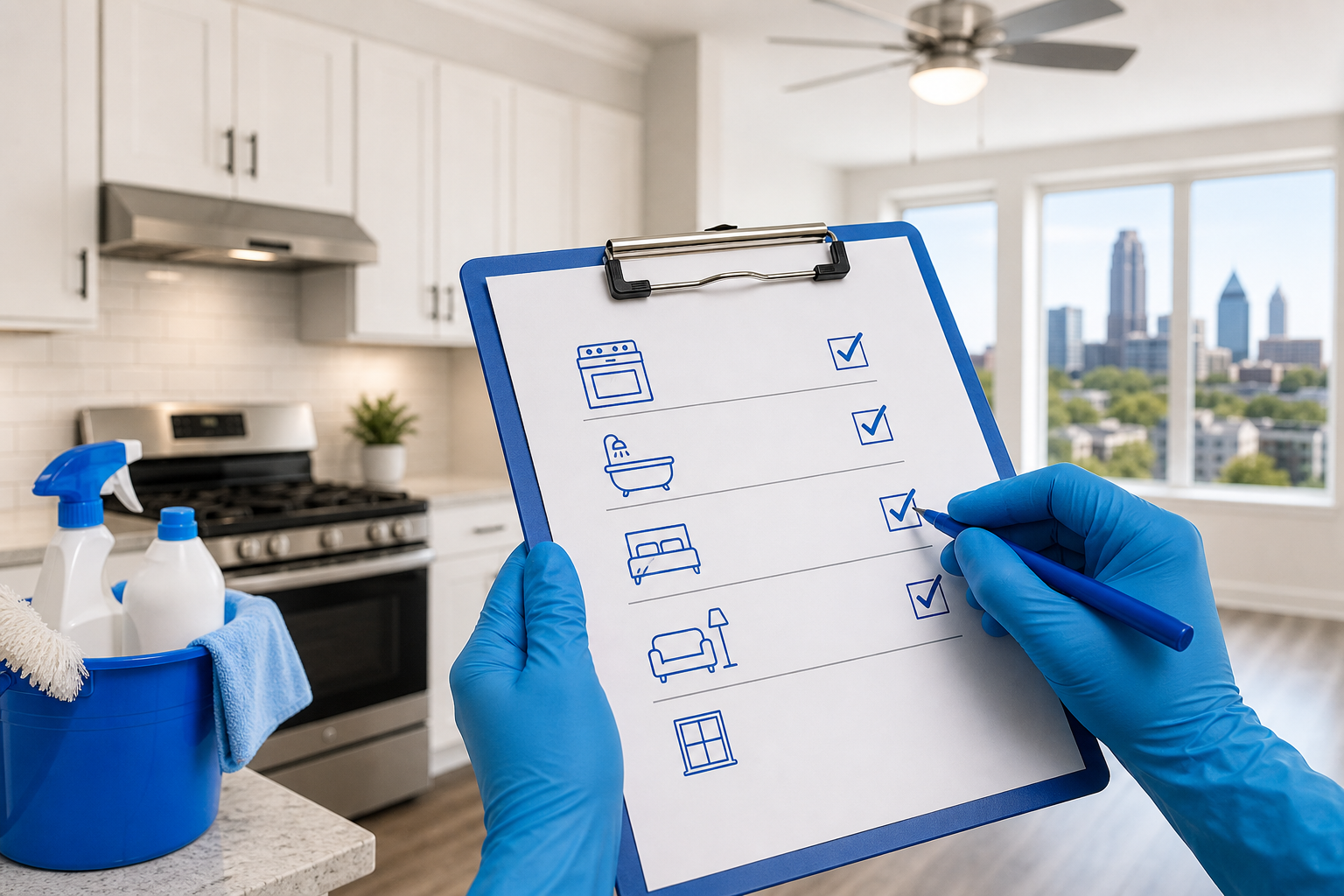
Moving out is stressful enough without losing part of your security deposit over a missed baseboard or a greasy oven. Whether you're searching for move-out cleaning near me or planning to handle it yourself, knowing exactly what landlords and property managers inspect makes the difference between a full refund and a deduction letter.
This checklist covers every room, flags the spots most renters miss, and explains when hiring a professional is actually worth it.
Why Move-Out Cleaning Is Different From Regular Cleaning
A standard maintenance clean keeps a home livable. A move-out clean is an inspection-ready reset. Landlords are looking at surfaces you probably haven't touched in months — the inside of the oven, grout lines in the bathroom, the tops of ceiling fans, the tracks of sliding doors.
Most lease agreements require you to return the unit in the same condition it was in at move-in, minus normal wear and tear. That phrase is a legal term that varies by state, but it generally covers light scuffs on walls and minor carpet wear. It does not cover grease buildup, soap scum, or dust-caked vents.
Getting this wrong is expensive. Security deposits in Georgia can equal up to two months' rent, so a sloppy clean can cost you hundreds of dollars.
Before You Start: What to Gather
You'll move faster and more thoroughly if you pull your supplies together before touching a single surface.
What you'll need:
- All-purpose cleaner
- Degreaser (specifically for the kitchen)
- Toilet bowl cleaner and scrub brush
- Grout brush or old toothbrush
- Microfiber cloths and paper towels
- Magic Eraser or melamine foam sponge
- Mop and bucket
- Vacuum with attachments
- Step stool or ladder for ceiling fans and vents
- Trash bags
For stubborn buildup, professional-grade cleaning concentrates outperform standard grocery store products. The difference is most obvious on oven interiors, grout, and hard water stains around fixtures.
Room-by-Room Move-Out Cleaning Checklist
Kitchen
The kitchen is where most deposit disputes start. Grease travels further than you'd expect, and inspectors check everywhere.
Appliances
- Oven interior: remove the racks, soak them separately, then degrease the interior walls and door glass
- Stovetop: clean burner grates or the glass surface; remove drip pans if applicable
- Microwave: wipe the interior ceiling, walls, and turntable plate
- Refrigerator: pull out all shelves and drawers, wash them, wipe down the interior walls and rubber door seal; defrost the freezer if needed
- Dishwasher: clean the filter at the bottom, wipe the door seal, run an empty cycle with a cleaning tablet
Surfaces and fixtures
- Cabinets: wipe inside and outside, including the tops if you can reach them
- Countertops: clean and dry completely; check for stains near the sink
- Sink: scrub the basin, faucet, and the area around the drain; remove any mineral deposits
- Backsplash: degrease tile and grout lines
- Exhaust fan or hood: wipe the filter and exterior
Floors
- Sweep, then mop; pay close attention to corners and the strip along the base of the cabinets
Bathrooms
Bathrooms are the second most scrutinized area. Soap scum, mildew, and hard water stains are the most common deduction triggers.
Shower and tub
- Scrub tile walls and floor
- Work the grout lines with a grout brush — mildew in grout is a frequent deduction
- Wipe down the showerhead and faucet handles
- Clean the shower door or curtain rod; replace the liner if it has mildew
Toilet
- Clean under the rim, the bowl, the exterior base, and behind the tank
- Wipe the seat, lid, and the bolts at the base
Vanity and fixtures
- Clean the sink basin, faucet, and drain
- Wipe inside and outside of cabinet doors
- Clean the mirror — streaks show up clearly during inspections
- Empty and wipe down any medicine cabinets
Floors and walls
- Mop tile floors, including behind the toilet
- Wipe baseboards
- Check for mildew on caulk lines around the tub and sink; if the caulk is discolored, note it in your move-out documentation
Bedrooms
Bedrooms are typically easier than kitchens and bathrooms, but there are spots renters routinely skip.
- Closets: vacuum floors, wipe shelves, and remove any hooks or adhesive strips from walls
- Windows: clean the glass on both sides if accessible, then wipe the sills and tracks
- Ceiling fan blades: dust collects heavily on top of the blades; use a microfiber sleeve or a damp cloth
- Baseboards: wipe the full length of every wall
- Light switches and outlet covers: wipe with a damp cloth — these are often visibly dirty and easy to overlook
- Walls: spot-clean scuffs with a Magic Eraser; note any damage beyond normal wear in your documentation
Living and Dining Areas
- Vacuum all carpet thoroughly; consider a professional carpet clean if you have pets or visible staining
- Hardwood or tile floors: sweep, then mop
- Ceiling fan and light fixtures: dust the blades, wipe globes or shades
- Baseboards and trim: wipe the full perimeter
- Fireplace (if applicable): clean the interior, remove ash, wipe the surround
- Windows: clean the glass, sills, and tracks
- Blinds: wipe each slat or use a blind-cleaning tool
- Walls: remove picture hooks and fill nail holes with spackling compound; sand smooth once dry
Laundry Room or Closet
- Wipe inside the washer drum and the door seal — mildew collects in the rubber gasket
- Clean the dryer drum and lint trap housing; vacuum the vent hose if you can reach it
- Wipe down the exterior of both machines and the top surfaces
- Clean the utility sink if there is one
- Sweep and mop the floor
Garage and Outdoor Areas
If your rental includes a garage, patio, or yard, check your lease for what's expected.
- Garage: sweep the floor, treat any oil stains with a degreaser, wipe down shelving
- Patio or deck: sweep and remove any furniture marks or stains
- Yard: mow if the lease requires it and clear any debris
The Spots Renters Miss Most Often
Even thorough DIY cleaners tend to overlook these:
- Inside the oven drawer below the main oven compartment
- The top of the refrigerator, which collects grease and dust
- Ceiling fan blades (the top surface)
- Window tracks, which fill with dead insects and debris
- The inside of the dishwasher filter
- Behind and under freestanding appliances
- Bathroom exhaust fan covers, which trap significant dust
- The inside of closet doors and the undersides of shelving
Inspectors who do this regularly know exactly where to look. These are typically the first places they check.
DIY vs. Hiring a Professional
For a smaller unit in good condition, a thorough DIY clean is manageable if you have two to three days and the right supplies. For a larger home, a home with pets, or a property where regular deep cleaning was skipped, professional help is usually the smarter financial call.
A professional move-out clean covers everything above systematically — including the deep-cleaning tasks that are easy to rush through when you're also packing boxes and coordinating a move.
When comparing services, ask a few specific questions: do they confirm what's included in writing, do they have a defined process for kitchen appliances, and what happens if the landlord finds something they missed?
If you're in metro Atlanta and already using a recurring cleaning service, it's worth asking whether they offer a one-time move-out option. Casovela offers a one-time single visit alongside its membership plans — useful if you want a crew that already knows how to clean a home to an inspection standard.
How to Document Your Work
Documentation protects you regardless of how well you clean.
Before you hand over the keys:
- Take timestamped photos of every room, every appliance interior, and every bathroom surface
- Photograph the walk-through checklist your landlord uses, if they provide one
- Request a written move-out inspection report from the landlord
- Keep copies of any professional cleaning receipts
In Georgia, landlords generally have 30 days after you vacate to return your deposit or provide an itemized list of deductions. If a landlord claims the unit was dirty and you have photographic proof otherwise, that documentation is your defense.
When to Schedule the Clean
Timing matters. The ideal sequence:
- Move all furniture and belongings out first
- Clean the empty unit — cleaning around furniture misses too much
- Do a final walkthrough with your checklist
- Take your documentation photos
- Return the keys
Scheduling a professional service for the day after your furniture is out gives you the cleanest result and the clearest photos.
A Note for Atlanta Renters
If you're moving within metro Atlanta — particularly in Buckhead, Midtown, or Decatur — the rental market is competitive and landlords in these neighborhoods tend to apply deposit deductions more consistently than in lower-demand areas. A thorough clean is worth the time or the cost.
For homeowners rather than renters, a move-out clean matters when selling too. Buyers and their agents notice the same things landlords do, and a spotless home photographs better and shows better during walkthroughs.
If you're settling into a new Atlanta home and want to start fresh, Casovela's membership service handles recurring cleaning with a dedicated, background-checked crew assigned to your home. Your preferences, pets, and problem areas go into a Home Profile that carries into every visit — so you never have to re-explain what you need.
Frequently Asked Questions
What does a move-out cleaning typically include?
A thorough move-out clean covers all rooms from ceiling to floor: appliance interiors (oven, refrigerator, microwave, dishwasher), bathroom grout and fixtures, baseboards, ceiling fans, window tracks, and closet interiors. It goes significantly deeper than a standard maintenance clean because the goal is returning the unit to its original condition.
How long does a move-out clean take?
A one-bedroom apartment in average condition typically takes three to five hours for one person working alone. A two-to-three bedroom home with a kitchen that hasn't been deep-cleaned recently can take a full day or longer. Professional crews working in pairs can usually complete the same job in roughly half the time.
Can I lose my security deposit even if I clean thoroughly?
Yes. If there's damage beyond normal wear and tear — broken fixtures, carpet stains, holes in walls — cleaning alone won't prevent a deduction. Document the unit's condition at both move-in and move-out to distinguish pre-existing damage from anything that happened during your tenancy.
Is it worth hiring a professional for a move-out clean?
For most renters in a two-bedroom or larger home, yes. The cost of a professional clean is typically far less than a partial deposit deduction, and professionals cover the high-scrutiny areas systematically. It also removes one major task from an already demanding moving week.
What's the difference between a move-out clean and a deep clean?
A deep clean focuses on areas skipped during routine maintenance: grout, baseboards, ceiling fans, appliance interiors, and similar surfaces. A move-out clean includes all of that plus a room-by-room reset specifically designed to meet landlord inspection standards — closets, window tracks, and condition documentation included.
How soon before my move-out date should I schedule a professional cleaning?
Book at least one to two weeks out, especially if you're moving at the end of a month or during summer. Schedule the clean for the day after your furniture is out so the crew has full access to every surface and corner.
What should I look for when hiring a move-out cleaning service near me?
Look for a service that confirms what's included in writing, has a clear process for appliance interiors, and can provide a receipt or service confirmation for your landlord. Background-checked crews and a stated reliability guarantee matter more for a one-time job than for recurring service — you have no prior relationship with the team, and a single missed visit can throw off your entire deposit timeline.