
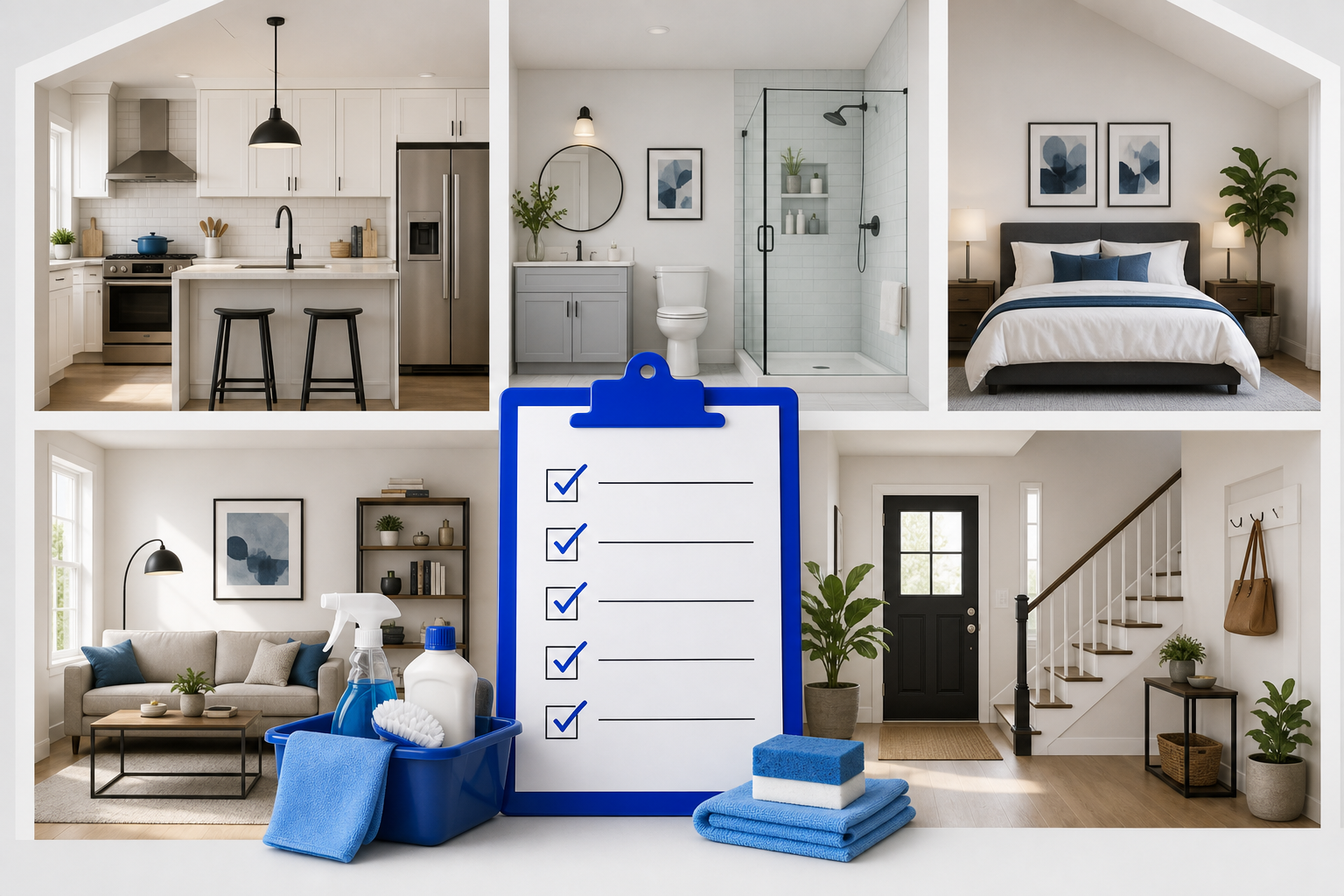
Spring has a way of making you notice everything you stopped seeing over winter. The dust caked onto ceiling fan blades. The grease film behind the stove. The baseboards that haven't been touched since last year. A real spring clean isn't just tidying up — it's resetting your home from top to bottom so it actually feels different when you walk through the door.
This room-by-room checklist gives you a practical plan to work through the whole house without losing track of what's done and what's left.
Before You Start: Set Yourself Up to Actually Finish
Most spring cleans fall apart because they turn into an all-day marathon that leaves you exhausted with half the house still undone. A few minutes of prep changes that.
Gather your supplies first. You'll need microfiber cloths, an all-purpose cleaner, a degreaser for the kitchen, glass cleaner, a vacuum with attachments, a mop, and a stiff scrub brush for grout. Keep everything in a caddy so you're not hunting for supplies mid-task.
Work top to bottom, back to front. Dust falls, so always start high — ceiling fans, light fixtures, shelves — and work toward the floor. Within each room, start at the far wall and move toward the door so you're not walking over surfaces you've already cleaned.
Finish one room before moving to the next. Jumping between rooms creates the feeling of progress without the satisfaction of anything actually being done.
Kitchen
The kitchen collects grease and grime in places that routine weekly cleaning never reaches. This is where a spring clean earns its keep.
Appliances and Surfaces
- Pull the refrigerator from the wall and vacuum the coils and the floor underneath
- Remove everything from the fridge, wipe down all shelves and drawers, and check expiration dates
- Clean the oven interior — either with the self-clean cycle or a baking soda and vinegar paste left overnight
- Degrease the range hood filter by soaking it in hot water and dish soap for about 20 minutes
- Wipe down the exterior of every appliance, including the sides of the refrigerator and the top of the microwave
Cabinets and Drawers
- Empty each cabinet, wipe the interior, then restack
- Clean cabinet exteriors and handles — grease builds up here faster than anywhere else in the kitchen
- Reorganize the pantry and pull anything expired
Details
- Scrub the backsplash tile and grout lines
- Clean the window above the sink
- Mop the floor, paying extra attention to the area in front of the stove and sink where spills concentrate
Bathrooms
Bathrooms take less time than kitchens but reward attention to grout and fixtures that get skipped during routine cleaning.
- Scrub grout lines on tile walls and floors with a stiff brush and grout cleaner or a baking soda paste
- Soak the showerhead in white vinegar for an hour to break down mineral buildup
- Wipe down the inside of bathroom cabinets and medicine chests
- Remove the exhaust fan cover and rinse off the dust
- Descale faucets and fixtures
- Wash shower curtains and liners — most fabric curtains go straight in the washing machine
- Wipe down baseboards and the area behind the toilet
Bedrooms
Bedrooms accumulate dust in places that affect air quality and sleep, especially in homes with pets.
- Strip the bed completely and wash all bedding — duvet inserts, mattress protectors, pillow covers, all of it
- Vacuum the mattress surface and flip or rotate it if the manufacturer recommends it
- Dust ceiling fan blades using a pillowcase to trap the dust instead of spreading it around the room
- Wipe down all furniture surfaces, including the tops of wardrobes and dressers
- Vacuum under the bed and move furniture to clean behind it
- Clean windows and window sills
- Wipe down light switches and door handles
- Vacuum or wash curtains
Living Areas
Living rooms and family rooms see constant foot traffic but rarely get the deep attention they need.
- Dust ceiling fans, light fixtures, and the tops of tall furniture
- Vacuum upholstered furniture, including under the cushions
- Clean behind and beneath the sofa and chairs
- Wipe down all hard surfaces — shelves, media units, side tables
- Clean the TV screen with a dry microfiber cloth only, no liquid
- Wipe down baseboards and clean window sills
- Clean windows inside and out where accessible
- Vacuum, then mop or deep-clean rugs and hardwood floors
Entryway, Hallways, and Stairs
These transitional spaces collect tracked-in dirt and almost never get dedicated attention.
- Wipe down the front door inside and out, including the door frame
- Clean light fixtures and replace any burned-out bulbs
- Vacuum stair treads and wipe down banisters
- Clean the inside of entryway closets — coat closets accumulate dust on shelves and floors faster than you'd expect
- Wipe down baseboards throughout
Home Office
If you work from home, your office has probably collected more dust than you realize.
- Dust all electronics and wipe down keyboards, monitors, and desk surfaces
- Vacuum behind and under the desk to clear out cable areas
- Wipe down shelves and deal with any paper clutter
- Clean the windows — better natural light makes a real difference
Outdoor and Overlooked Areas
A few tasks that go beyond the main rooms but make the whole effort feel complete.
- Wipe down light switch plates and outlet covers throughout the house
- Clean the inside of the washing machine with a hot cycle and white vinegar or a machine cleaner
- Wipe down the dryer drum and clean the lint trap housing
- Vacuum and clean the garage floor if applicable
- Sweep and rinse outdoor areas like the front porch or back deck
Turning Your Spring Clean Into a Maintenance System
Doing the spring clean once isn't the hard part. The hard part is not needing to do it at the same scale again next year. That comes down to what happens in between.
A consistent cleaning schedule handles the weekly and biweekly tasks that keep surface grime from building back into the kind of buildup that requires a full reset. For Atlanta homeowners with already full schedules, that maintenance layer is usually where things break down.
Casovela is a home cleaning membership built for exactly that. You complete a Home Profile with your preferences, pet details, and problem areas, then choose a weekly, biweekly, or monthly frequency. The same background-checked crew returns every visit with your preferences already on file — no re-explaining, no rotating strangers. A rotating deep-clean task cycle covers the things that tend to accumulate between spring cleans: baseboards, ceiling fans, the refrigerator, oven, grout, and windows. Scheduling and billing run automatically through the client portal. You don't manage any of it.
If the goal of this spring clean is to start fresh and actually stay that way, a membership that handles the ongoing work is worth a look.
Work through the checklist room by room, give yourself more than one day if the house calls for it, and treat it as the starting point for a maintenance routine that keeps the work manageable all year long.
Frequently Asked Questions
How long does a full spring clean take?
For a 2 to 4 bedroom home, plan for 6 to 10 hours if you're working through the full checklist. Splitting it across two days — kitchen, bathrooms, and bedrooms on day one, living areas and detail work on day two — makes it far more manageable.
What's the difference between spring cleaning and regular cleaning?
Regular cleaning maintains surfaces: vacuuming, wiping counters, scrubbing toilets. Spring cleaning goes deeper — inside appliances, behind furniture, grout lines, ceiling fans, and areas that don't get touched during routine maintenance.
What order should I clean rooms in?
Start with the rooms that take the most time and effort, typically the kitchen and bathrooms. Finish with living areas and bedrooms. Always work top to bottom within each room so falling dust doesn't re-dirty surfaces you've already cleaned.
How do I clean grout without scrubbing for hours?
Apply a paste of baking soda and water to the grout lines, spray with white vinegar, let it fizz for 5 to 10 minutes, then scrub with a stiff-bristled brush. For heavily stained grout, a commercial grout cleaner with a proper dwell time does most of the work before you even pick up the brush.
Should I declutter before or during spring cleaning?
Before. Decluttering first means you're not cleaning around things that are leaving the house anyway. Clear surfaces and empty shelves before you start wiping them down.
How do I clean a refrigerator without it taking forever?
Remove everything and put perishables in a cooler. Take out all shelves and drawers and wash them in the sink with warm soapy water. Wipe the interior walls with an all-purpose cleaner or a baking soda solution, then dry everything before putting it back. Done systematically, the whole process takes about 30 to 40 minutes.
What's the best way to maintain a clean home after spring cleaning?
Consistent light cleaning between deep cleans. A biweekly or monthly professional cleaning keeps surface buildup from returning to spring-clean levels, so your next annual deep clean is significantly lighter.